Health Videos
Cville Tulips and the International Family Medicine Clinic at UVA are creating short, culturally responsive health education videos that can be shared in accessible ways, to support health learning. The project pairs trusted medical professionals with community members and uses simple visuals and conversation-based scripts so families can better understand important health topics at home.

-
• 9/14/26
Sugary Drinks: Children's Health (English)
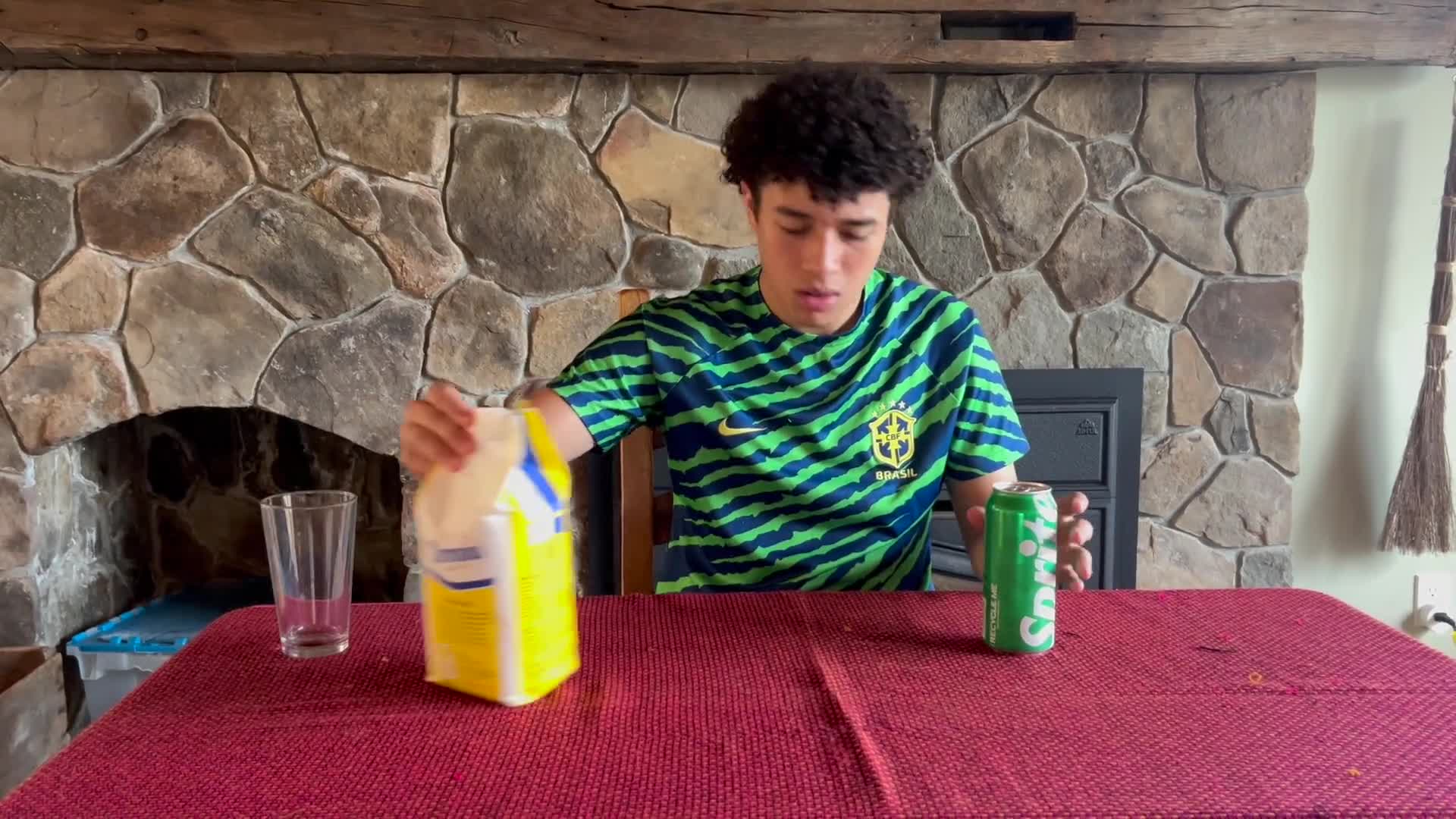
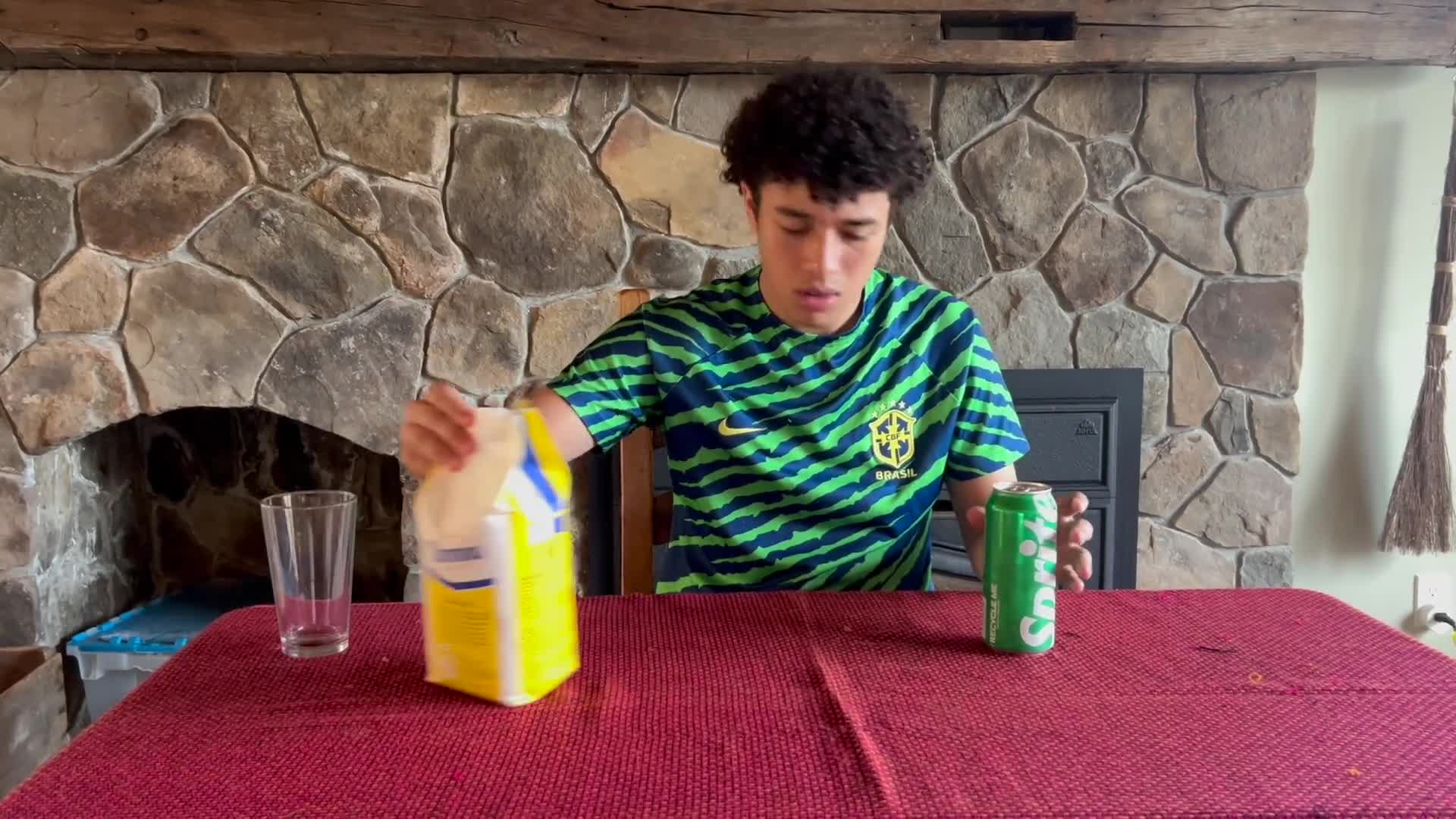
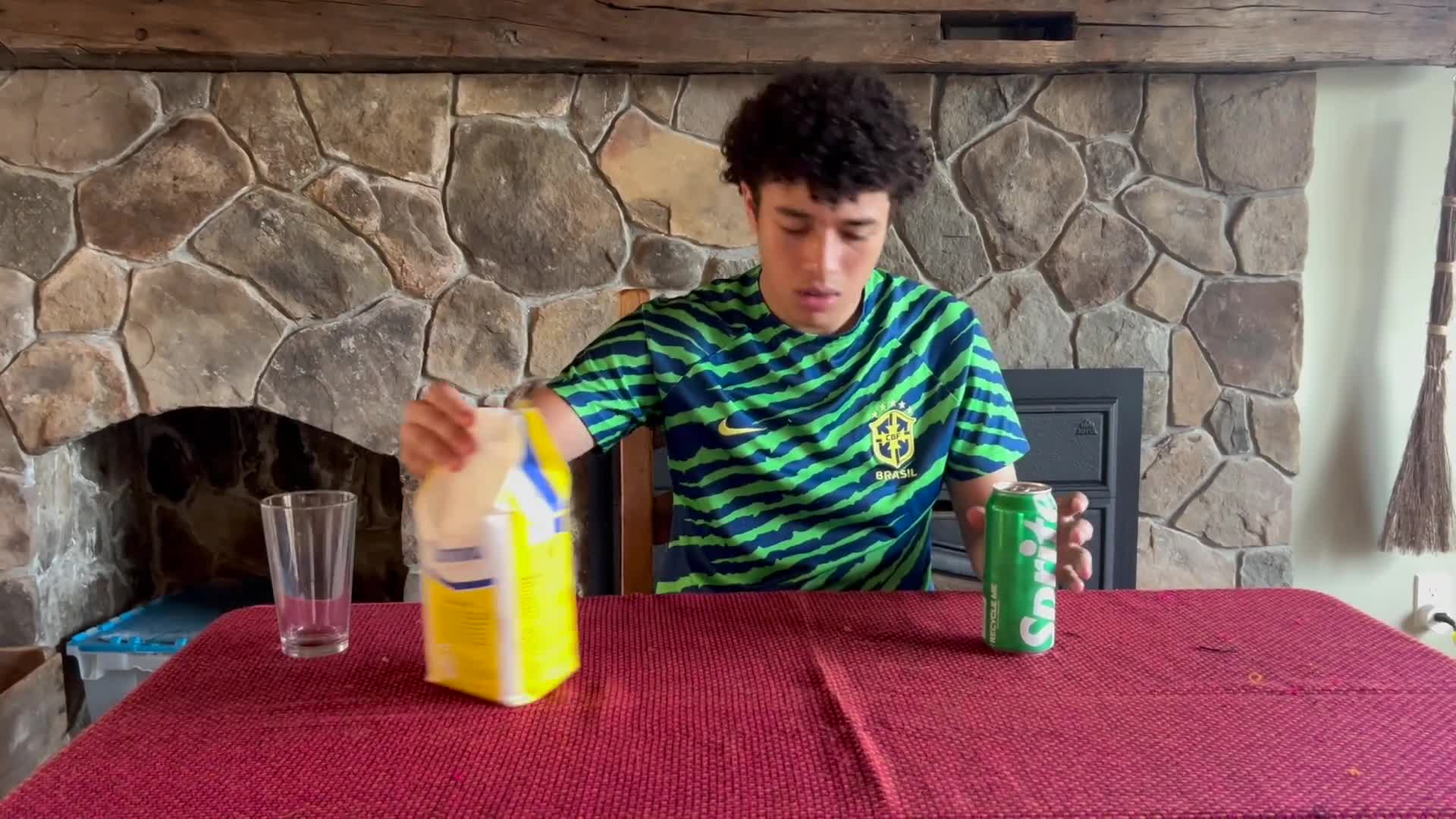
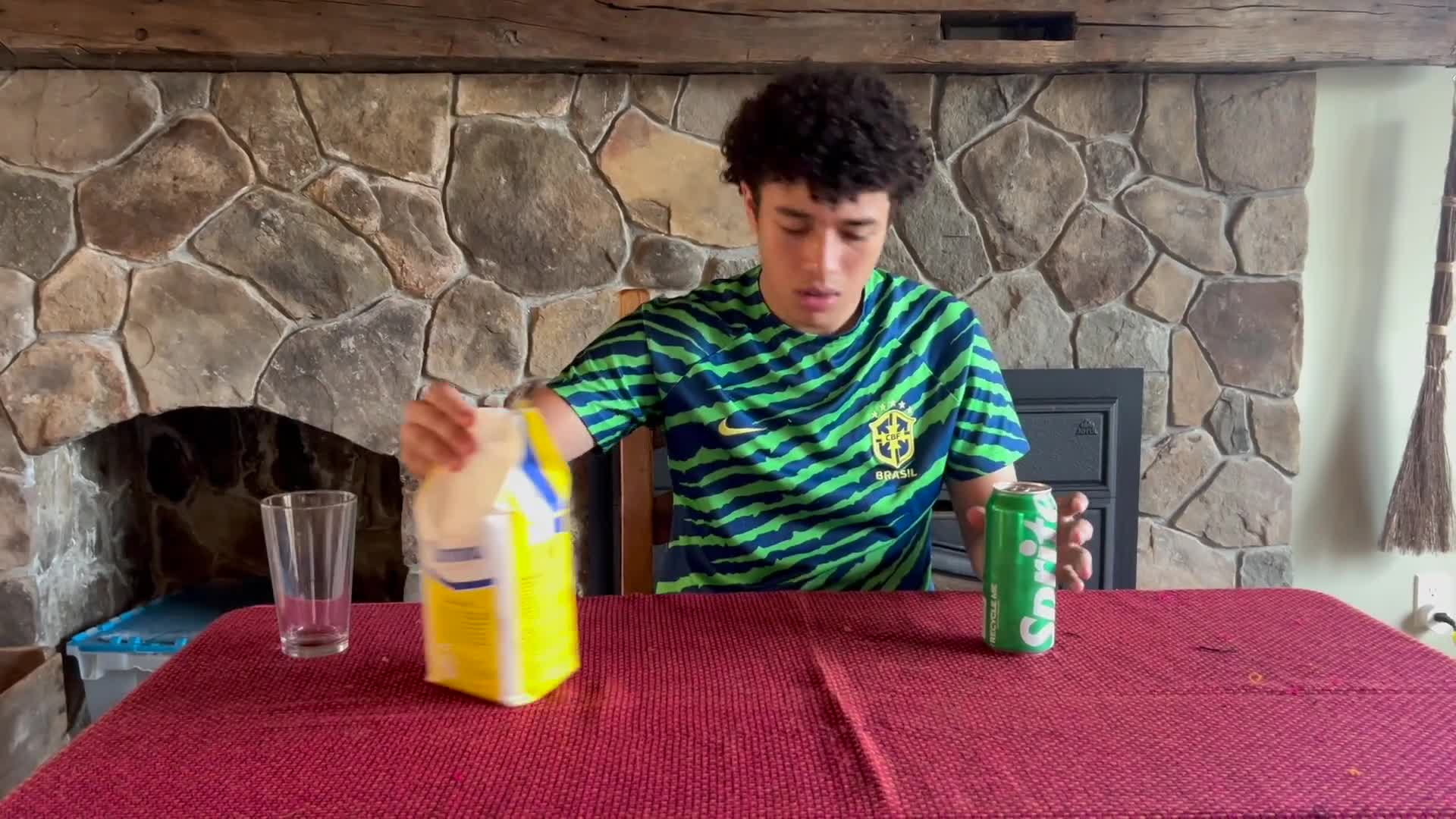
This short film helps families understand how drinks with high amounts of added sugar, such as soda and energy drinks, can affect children’s health. Two high school students demonstrate how much sugar can be found in a can of soda and discuss how sugary drinks may affect children’s energy, concentration, sleep, and dental health. The film also explains why energy drinks can be especially concerning for children and encourages families to choose healthier drinks, with water as a simple and healthy choice. Thank you to Jacob Dangel and Anir AitDowd for making this video when they were high school seniors.
Video Script“I’m thirsty.”
“Some drinks have a hidden danger.”
“These aren’t good for a child's body.”
“Before sweet drinks, a child is calm.”
“After drinking sugar, their behavior changes.”
“They get too much energy. They cannot sit still.”
“Then, they crash. They become very tired and cranky.”
“Energy drinks are even worse for children.”
“They make a child's heart beat too fast. They cause shaking.”
“They stop children from sleeping.”
“The large amount of sugar in both soda and energy drinks can cause damage to children’s teeth”
“Water is best for your child. Please choose healthier drinks.”
-
• 9/4/26
Sugary Drinks: Children’s Health (Dari)
This short film helps families understand how drinks with high amounts of added sugar, such as soda and energy drinks, can affect children’s health. Two high school students demonstrate how much sugar can be found in a can of soda and discuss how sugary drinks may affect children’s energy, concentration, sleep, and dental health. The film also explains why energy drinks can be especially concerning for children and encourages families to choose healthier drinks, with water as a simple and healthy choice.
Thank you to Jacob Dangel and Anir AitDowd for making this video when they were high school seniors; Marjan Omranian and Siavash Mohebbi for edits, and Mohammad Jan Bostani for the voice-over.
Video Script“I’m thirsty.”
“Some drinks have a hidden danger.”
“These aren’t good for a child's body.”
“Before sweet drinks, a child is calm.”
“After drinking sugar, their behavior changes.”
“They get too much energy. They cannot sit still.”
“Then, they crash. They become very tired and cranky.”
“Energy drinks are even worse for children.”
“They make a child's heart beat too fast. They cause shaking.”
“They stop children from sleeping.”
“The large amount of sugar in both soda and energy drinks can cause damage to children’s teeth”
“Water is best for your child. Please choose healthier drinks.”
-
• 9/4/26
Sugary Drinks: Children's Health (Pashto)
This short film helps families understand how drinks with high amounts of added sugar, such as soda and energy drinks, can affect children’s health. Two high school students demonstrate how much sugar can be found in a can of soda and discuss how sugary drinks may affect children’s energy, concentration, sleep, and dental health. The film also explains why energy drinks can be especially concerning for children and encourages families to choose healthier drinks, with water as a simple and healthy choice.
Thank you to Jacob Dangel and Anir AitDowd for making this video when they were high school seniors; Marjan Omranian and Siavash Mohebbi for edits, and Shoheb Ihsan for the voice-over.
Video Script“I’m thirsty.”
“Some drinks have a hidden danger.”
“These aren’t good for a child's body.”
“Before sweet drinks, a child is calm.”
“After drinking sugar, their behavior changes.”
“They get too much energy. They cannot sit still.”
“Then, they crash. They become very tired and cranky.”
“Energy drinks are even worse for children.”
“They make a child's heart beat too fast. They cause shaking.”
“They stop children from sleeping.”
“The large amount of sugar in both soda and energy drinks can cause damage to children’s teeth”
“Water is best for your child. Please choose healthier drinks.”
-
• 9/4/26
Sugary Drinks: Children's Health (Arabic)
This short film helps families understand how drinks with high amounts of added sugar, such as soda and energy drinks, can affect children’s health. Two high school students demonstrate how much sugar can be found in a can of soda and discuss how sugary drinks may affect children’s energy, concentration, sleep, and dental health. The film also explains why energy drinks can be especially concerning for children and encourages families to choose healthier drinks, with water as a simple and healthy choice.
Thank you to Jacob Dangel and Anir AitDowd for making this video when they were high school seniors; Marjan Omranian and Siavash Mohebbi for edits, and Mohammad Aloush for the voice-over.
Video Script“I’m thirsty.”
“Some drinks have a hidden danger.”
“These aren’t good for a child's body.”
“Before sweet drinks, a child is calm.”
“After drinking sugar, their behavior changes.”
“They get too much energy. They cannot sit still.”
“Then, they crash. They become very tired and cranky.”
“Energy drinks are even worse for children.”
“They make a child's heart beat too fast. They cause shaking.”
“They stop children from sleeping.”
“The large amount of sugar in both soda and energy drinks can cause damage to children’s teeth”
“Water is best for your child. Please choose healthier drinks.”
-
 • 1/30/26
Healthy Futures: Long-Term Medications (Dari)
This short film helps families understand why some medicines need to be taken for many months or years, even when a person does not feel sick. Through a staged conversation featuring Dr. Fern Hauk the video explains how long-term medications can help manage conditions such as high blood pressure, diabetes, and high cholesterol, while also preventing future health problems like heart attacks or strokes. The film also encourages patients to ask questions, plan ahead for refills, and talk with their doctor if they have side effects, trouble getting to the pharmacy, or concerns about cost.
Thank you to Dr. Mansi Trivedi, Dr. Jessica Row, and Dr. Fern Hauck for developing the script; Pooja Viswesh, Marjan Omranian, and Rebecca Lerdue for creating and editing the video; Maryam Hamza for appearing in the video; and Samman Akbarzada for providing the voice-over.
Video ScriptNARRATOR: "At the end of a doctor’s visit, your provider may suggest starting a new medicine. Medicines can be taken for a few days or weeks, but also for months, even years. In this short video, we’ll talk about why long-term medications are important, and how you can manage them."
PATIENT: Doctor, why do we sometimes need to take medicine for such a long time?
DOCTOR: Great question. Some health conditions don’t go away on their own and need ongoing treatment. Conditions such as high blood pressure, diabetes, high cholesterol, or even stress. Even if you don’t feel sick, these conditions can still affect your heart and other parts of your body over time. Sometimes we give medicine not just to treat illness, but to prevent future problems—like heart attacks or strokes.
PATIENT: If the doctor gives us a new medication, what should we pay attention to?
DOCTOR: It’s always okay to ask questions! Here are some good ones to ask your doctor: What is this medicine for? How long will I take it? Will I need refills?” If the doctor says you’ll be taking it for a long time, it helps to plan ahead—especially for refills and reminders.
PATIENT: What if we run out of medicine?
DOCTOR: First, finishing all the pills in your bottle does not mean that the medication is complete. So, when you see your bottle beginning to run low, you can go to your pharmacy to obtain a new bottle. If your pharmacy does not have a new bottle for you, then you should call your doctor’s office to request a refill. Importantly, if you are experiencing side effects from your medication, if you are struggling to get to the pharmacy, or if the medication is too expensive, please be sure to tell your doctor.
-
 • 1/30/26
Healthy Futures: Long-Term Medications (Pashto)
This short film helps families understand why some medicines need to be taken for many months or years, even when a person does not feel sick. Through a staged conversation featuring Dr. Fern Hauk the video explains how long-term medications can help manage conditions such as high blood pressure, diabetes, and high cholesterol, while also preventing future health problems like heart attacks or strokes. The film also encourages patients to ask questions, plan ahead for refills, and talk with their doctor if they have side effects, trouble getting to the pharmacy, or concerns about cost.
Thank you to Dr. Mansi Trivedi, Dr. Jessica Row, and Dr. Fern Hauck for developing the script; Pooja Viswesh, Marjan Omranian, and Rebecca Lerdue for creating and editing the video; Maryam Hamza for appearing in the video; and Marella Sediqi and Ebrahimi for providing the voice-over.
Video Script
NARRATOR: "At the end of a doctor’s visit, your provider may suggest starting a new medicine. Medicines can be taken for a few days or weeks, but also for months, even years. In this short video, we’ll talk about why long-term medications are important, and how you can manage them."
PATIENT: Doctor, why do we sometimes need to take medicine for such a long time?
DOCTOR: Great question. Some health conditions don’t go away on their own and need ongoing treatment. Conditions such as high blood pressure, diabetes, high cholesterol, or even stress. Even if you don’t feel sick, these conditions can still affect your heart and other parts of your body over time. Sometimes we give medicine not just to treat illness, but to prevent future problems—like heart attacks or strokes.
PATIENT: If the doctor gives us a new medication, what should we pay attention to?
DOCTOR: It’s always okay to ask questions! Here are some good ones to ask your doctor: What is this medicine for? How long will I take it? Will I need refills?” If the doctor says you’ll be taking it for a long time, it helps to plan ahead—especially for refills and reminders.
PATIENT: What if we run out of medicine?
DOCTOR: First, finishing all the pills in your bottle does not mean that the medication is complete. So, when you see your bottle beginning to run low, you can go to your pharmacy to obtain a new bottle. If your pharmacy does not have a new bottle for you, then you should call your doctor’s office to request a refill. Importantly, if you are experiencing side effects from your medication, if you are struggling to get to the pharmacy, or if the medication is too expensive, please be sure to tell your doctor.
-
 • 1/30/26
Healthy Futures: Long-Term Medications (Arabic)
This short film helps families understand why some medicines need to be taken for many months or years, even when a person does not feel sick. Through a staged conversation featuring Dr. Fern Hauk the video explains how long-term medications can help manage conditions such as high blood pressure, diabetes, and high cholesterol, while also preventing future health problems like heart attacks or strokes. The film also encourages patients to ask questions, plan ahead for refills, and talk with their doctor if they have side effects, trouble getting to the pharmacy, or concerns about cost.
Thank you to Dr. Mansi Trivedi, Dr. Jessica Row, and Dr. Fern Hauck for developing the script; Pooja Viswesh, Marjan Omranian, and Rebecca Lerdue for creating and editing the video; Maryam Hamza for appearing in the video; and Ayla Kishi and Ebrahimi for providing the voice-over.
Video Script
NARRATOR: "At the end of a doctor’s visit, your provider may suggest starting a new medicine. Medicines can be taken for a few days or weeks, but also for months, even years. In this short video, we’ll talk about why long-term medications are important, and how you can manage them."
PATIENT: Doctor, why do we sometimes need to take medicine for such a long time?
DOCTOR: Great question. Some health conditions don’t go away on their own and need ongoing treatment. Conditions such as high blood pressure, diabetes, high cholesterol, or even stress. Even if you don’t feel sick, these conditions can still affect your heart and other parts of your body over time. Sometimes we give medicine not just to treat illness, but to prevent future problems—like heart attacks or strokes.
PATIENT: If the doctor gives us a new medication, what should we pay attention to?
DOCTOR: It’s always okay to ask questions! Here are some good ones to ask your doctor: What is this medicine for? How long will I take it? Will I need refills?” If the doctor says you’ll be taking it for a long time, it helps to plan ahead—especially for refills and reminders.
PATIENT: What if we run out of medicine?
DOCTOR: First, finishing all the pills in your bottle does not mean that the medication is complete. So, when you see your bottle beginning to run low, you can go to your pharmacy to obtain a new bottle. If your pharmacy does not have a new bottle for you, then you should call your doctor’s office to request a refill. Importantly, if you are experiencing side effects from your medication, if you are struggling to get to the pharmacy, or if the medication is too expensive, please be sure to tell your doctor.
-
 • 1/30/26
Box Breathing: A Simple Way to Calm Your Body (Dari)
This video introduces a simple breathing technique that can help calm the body during moments of stress. Dr. Fern Hauck, founder of the International Family Medicine Clinic (IFMC), leads viewers through a gentle conversation and easy visual guidance. The video teaches viewers how to practice box breathing by breathing in, holding, breathing out, and pausing again in a steady four-count pattern.
Thank you to Dr. Mansi Trivedi, Dr. Jessica Row, and Dr. Fern Hauck for developing the script; Pooja Viswesh, Marjan Omranian, and Rebecca Lerdue for creating and editing the video; Maryam Hamza for appearing in the video; and Samman Akbarzada for providing the voice-over.
Video Script
NARRATOR: “There are moments in life when we feel anxious, overwhelmed, or stressed. One way to help your body feel calm is through your breath. In this video, we’ll show you a simple breathing method called box breathing that you can do anytime, anywhere.”
PATIENT: Doctor, sometimes I feel very stressed—like everything is too much. Is there something I can do in those moments to feel better?
DOCTOR: Yes, many people feel that way. One simple thing you can do is use your breath to calm your body. I’d love to show you a method called box breathing.
PATIENT: Box breathing? What’s that?
DOCTOR: It’s like imagining a square and breathing around it. We breathe in for 4 counts… hold for 4… breathe out for 4… and hold again for 4. Let’s try it together once. I’ll guide you first.
DOCTOR: Now you can try it.
NARRATOR: Box breathing can help calm your body and mind. You can do it anytime—before sleep, during a busy day, or anytime you need a moment to breathe.
-
 • 1/30/26
Box Breathing: A Simple Way to Calm Your Body (Pashto)
This video introduces a simple breathing technique that can help calm the body during moments of stress. Dr. Fern Hauck, founder of the International Family Medicine Clinic (IFMC), leads viewers through a gentle conversation and easy visual guidance. The video teaches viewers how to practice box breathing by breathing in, holding, breathing out, and pausing again in a steady four-count pattern.
Thank you to Dr. Mansi Trivedi, Dr. Jessica Row, and Dr. Fern Hauck for developing the script; Pooja Viswesh, Marjan Omranian, and Rebecca Lerdue for creating and editing the video; Maryam Hamza for appearing in the video; and Marella Sediqi and Ebrahimi for providing the voice-over.
Video Script
NARRATOR: “There are moments in life when we feel anxious, overwhelmed, or stressed. One way to help your body feel calm is through your breath. In this video, we’ll show you a simple breathing method called box breathing that you can do anytime, anywhere.”
PATIENT: Doctor, sometimes I feel very stressed—like everything is too much. Is there something I can do in those moments to feel better?
DOCTOR: Yes, many people feel that way. One simple thing you can do is use your breath to calm your body. I’d love to show you a method called box breathing.
PATIENT: Box breathing? What’s that?
DOCTOR: It’s like imagining a square and breathing around it. We breathe in for 4 counts… hold for 4… breathe out for 4… and hold again for 4. Let’s try it together once. I’ll guide you first.
DOCTOR: Now you can try it.
NARRATOR: Box breathing can help calm your body and mind. You can do it anytime—before sleep, during a busy day, or anytime you need a moment to breathe.
-
 • 1/30/26
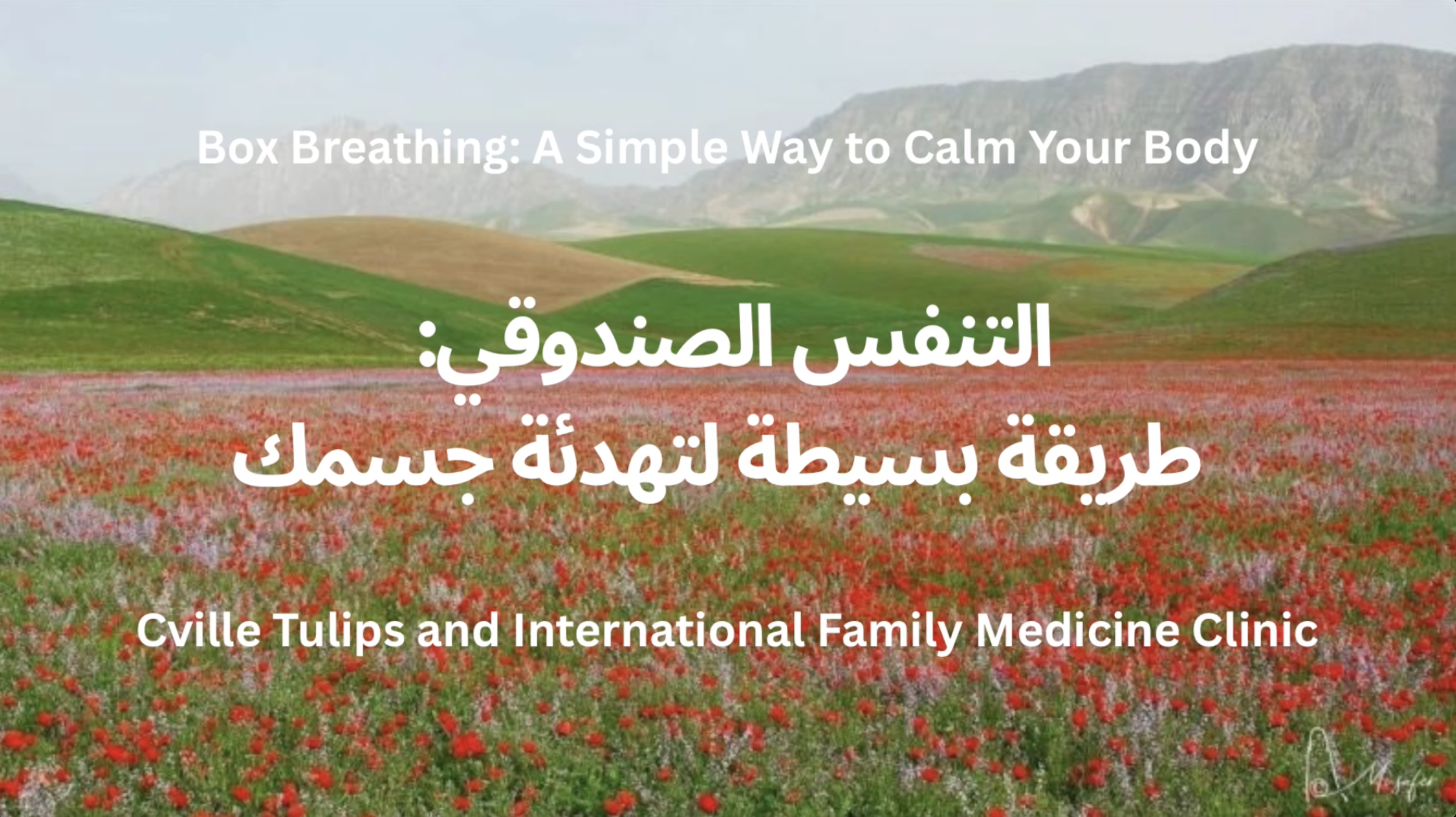
Box Breathing: A Simple Way to Caslm Your Body (Arabic)
This video introduces a simple breathing technique that can help calm the body during moments of stress. Dr. Fern Hauck, founder of the International Family Medicine Clinic (IFMC), leads viewers through a gentle conversation and easy visual guidance. The video teaches viewers how to practice box breathing by breathing in, holding, breathing out, and pausing again in a steady four-count pattern.
Thank you to Dr. Mansi Trivedi, Dr. Jessica Row, and Dr. Fern Hauck for developing the script; Pooja Viswesh, Marjan Omranian, and Rebecca Lerdue for creating and editing the video; Maryam Hamza for appearing in the video; and Ayla Kishi and Ebrahimi for providing the voice-over.
Video Script
NARRATOR: “There are moments in life when we feel anxious, overwhelmed, or stressed. One way to help your body feel calm is through your breath. In this video, we’ll show you a simple breathing method called box breathing that you can do anytime, anywhere.”
PATIENT: Doctor, sometimes I feel very stressed—like everything is too much. Is there something I can do in those moments to feel better?
DOCTOR: Yes, many people feel that way. One simple thing you can do is use your breath to calm your body. I’d love to show you a method called box breathing.
PATIENT: Box breathing? What’s that?
DOCTOR: It’s like imagining a square and breathing around it. We breathe in for 4 counts… hold for 4… breathe out for 4… and hold again for 4. Let’s try it together once. I’ll guide you first.
DOCTOR: Now you can try it.
NARRATOR: Box breathing can help calm your body and mind. You can do it anytime—before sleep, during a busy day, or anytime you need a moment to breathe.